
NusaSehat NusaSehat
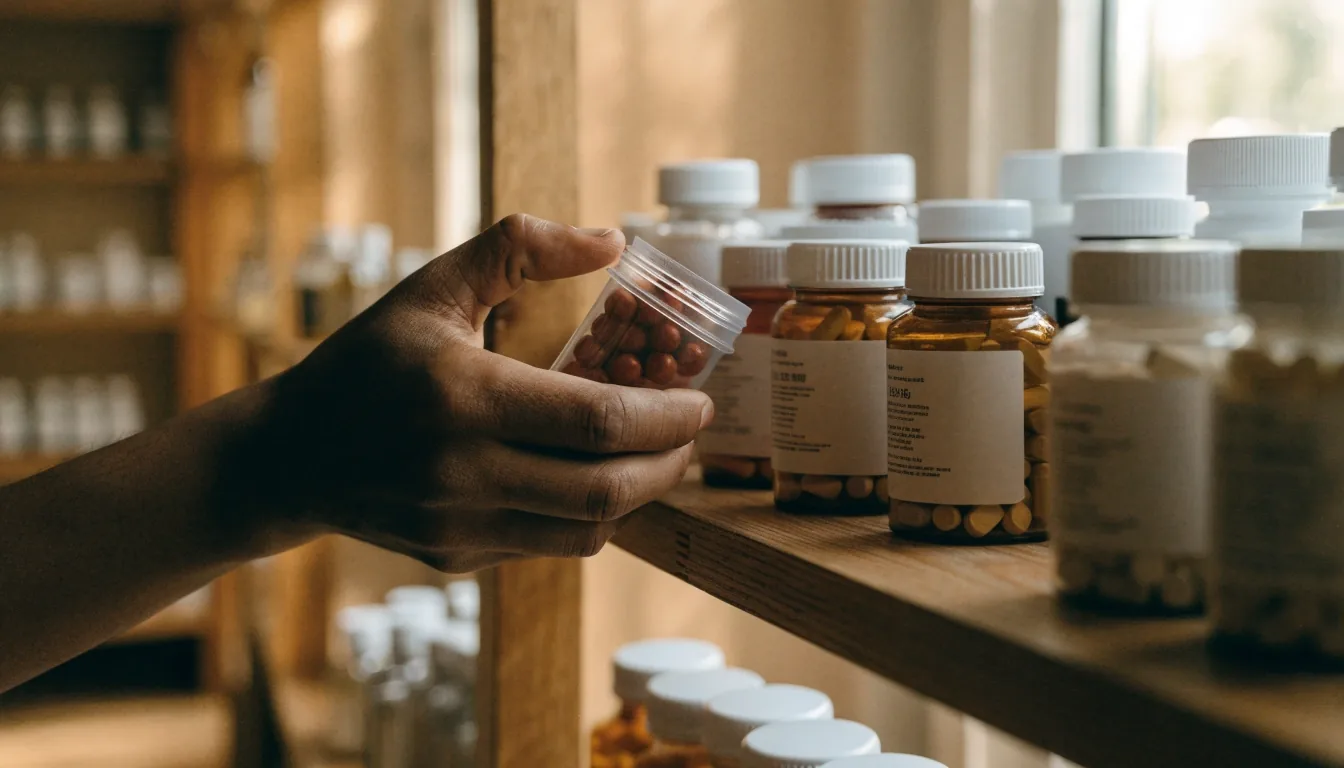
A man's hand reaching for a supplement container on a warmly lit shelf in a Denpasar health shop

About NusaSehat

About NusaSehat and how we work

An editorial site about natural supplements for men, written in English with Indonesian context from Denpasar, Bali.

Who runs NusaSehat

We are writers and researchers, not retailers. Nobody on the team sells supplements, and the site takes no advertising for specific products.

NusaSehat is run by a small editorial team based in Denpasar, Bali, at Jl. Teuku Umar No. 22. We publish ingredient explainers, formula comparisons and practical selection guides for readers who want to understand what is actually in a container before they buy it.

Staying away from product sales keeps the writing focused on what a label says rather than on what moves inventory. Our address and phone number live on the Contact page, and we answer emails at [email protected]. If you spot an error in a guide, we would like to hear about it, because the site only works when the information is accurate.

Office hours

Monday to Friday, 09:00–18:00 Bali time on +62 361 272 711. Corrections and substantive questions are read in order of arrival, and we reply as quickly as the queue allows — a day is not always enough.

A morning counter in Bali with a glass of water and an unlabeled supplement container in warm sunlight

What we write about

Four kinds of pages, each with one job. Ingredient explainers cover the minerals, vitamins and botanicals that appear most often in men's formulas: zinc, magnesium, B-complex, vitamin D, omega-3, CoQ10, ashwagandha, maca, tongkat ali and saw palmetto. Comparisons group products by the shape they actually take. Selection guides cover age, diet, training load and daily routine. Label-reading material teaches the practical skills.

Ingredient explainers

One page per ingredient, in the format it usually appears: what it is, which formula shapes include it, how serving size changes what you get per serving. Written for readers comparing men's vitamin formulas, not for buyers hunting a bargain.

Formula comparisons

Products grouped by the four shapes they take: mineral-plus-vitamin, botanical blend, daily multivitamin, and targeted formula. The point is to show the pattern, so you can tell which shape fits the routine you already keep.

Selection guides

Age, diet, training load and daily routine change which format makes sense — a capsule taken at breakfast is a different habit from a powder mixed after training. These guides walk through the trade-offs in plain language.

Label reading

Finding the ingredient list, reading serving size and amount per serving, understanding format, and knowing what storage advice actually means in a tropical climate. The part of the guide you can use in the shop.

Three rules govern every page we publish: no outcome promises, no invented facts, no rankings.

How we research

For each guide we start with the manufacturer's own product pages and label information. Then we cross-check ingredient names and formats against publicly available reference material. Where we use a specific product as an example, it is because the product illustrates a pattern well, not because it is better than alternatives.

We do not run original studies, and we do not present ourselves as a scientific authority. When an ingredient's traditional use is the relevant context, we say so. When a manufacturer frames a product in a specific way, we describe that framing rather than adopt it.

  1. 1

    Start from the label

    Ingredient names, amounts per serving, and format come from the manufacturer's own materials. Anything we cannot source stays out of the guide.

  2. 2

    Cross-check the terms

    We verify that ingredient names and formats match publicly available reference material, so two brands naming the same thing are not treated as different products.

  3. 3

    Describe, do not adopt

    When a brand frames its product a certain way, we describe that framing and note what is actually on the label. The wording on the page belongs to us, not to the brand.

  4. 4

    Show the format plainly

    Capsule or powder, one-a-day or three servings. Format decides how well a product fits a routine, so we state it on every example we use.

A man in Denpasar holding a supplement container up to the window light to read its ingredient panel

Editorial standards

First: no outcome promises about any ingredient or formula. Supplements are not a substitute for food, sleep, movement or professional advice, and we write accordingly — support-oriented, ingredient-led, lifestyle-focused in tone.

Second: no invented facts. If we cannot source a claim to a manufacturer's own materials or a publicly available reference, we leave it out. That includes descriptions of what an ingredient does in the body.

Third: no rankings or endorsements. We mention examples when they clarify a pattern, and we say explicitly that we are not recommending one over another. If a page starts to read like a sales pitch, we have failed at the job.

What we do not do

We do not sell anything. We do not publish prices, promotions or availability. We do not run affiliate links, and we do not accept payment for inclusion. Our pages are free to read and free of sponsored placements; that is the arrangement that keeps them useful.

We also do not give individual advice. Questions about what you should take, whether two products can be combined, or whether to keep taking something you already use belong with a pharmacist or doctor. We will happily explain what a label says. We will not tell you what to do with it.

We do not publish ratings or dramatic before-and-after material, because we have no way to verify what any individual experiences. Where a page would need that kind of content to look convincing, the honest answer is that it does not belong on the site.

How often we update

Ingredient guides and formula comparisons get reviewed when a brand changes its lineup, when a product we cite is discontinued, and when readers send a correction. Corrections get priority over new writing, because an outdated example is worse than no example.

Label-reading material is reviewed less often because the fundamentals change slowly. If a labelling convention shifts in Indonesia, we update the relevant sections. If you notice something stale, the Contact page is open.

Why the site exists

Shopping for natural supplements for men in Indonesia is confusing, and most of the confusion is unnecessary. Products are described in ways that prioritise marketing over information, and the same handful of ingredients gets repackaged under hundreds of brand names. A clear explanation of what those ingredients are, and how formulas differ, is genuinely useful.

That is the whole remit. We are not here to convince anyone to take supplements or buy healthy lifestyle products. We are here to make the ones already on the shelf easier to understand, so a decision that currently takes an hour of scrolling can take fifteen minutes with a label in your hand.

What we cover, and what stays out

Every guide on the site falls into one of four lanes. Keeping them separate stops a comparison page from turning into a general essay, and stops an ingredient page from repeating the same product list.

Ingredients in men's formulas
Zinc, magnesium, B-complex, vitamin D, omega-3, CoQ10, ashwagandha, maca, tongkat ali and saw palmetto — what the label calls them, what forms they appear in, and how serving size shifts the amount per serving.
Formula shapes
Mineral-plus-vitamin, botanical blend, daily multivitamin, targeted formula. Named patterns, not rankings — a shape only tells you what the container is trying to do.
Age, diet and routine
How age, diet, training load and daily routine change which format fits. Written around energy and endurance formulas as a category, not as a promise about any one product.
Label and storage skills
Reading a supplement facts panel, comparing amount per serving, and understanding what storage advice means in a tropical climate — including how heat and humidity change the shelf life of items you keep at home.
A small editorial office corner in Denpasar with desks, a water bottle, glass dishes of supplements and a turning fan

Questions we get asked

A few answers that come up often. If yours is not here, email is the fastest route, and we read everything that arrives.

Who writes the guides on NusaSehat?

A small editorial team based in Denpasar, Bali. We are writers and researchers, not retailers and not medical professionals. That is deliberate: it keeps the guides about what is on a label rather than about what to buy.

Do you accept sponsored content?

No. NusaSehat does not accept sponsored content, paid placements, or advertising for specific products. If a mention looks like a recommendation, that is an error on our side and worth reporting.

Can I suggest a topic?

Yes. Email [email protected] with the suggestion. We read all of them, though we cannot promise to publish every one — the editorial rules above decide what makes it onto the site.

Can I send a correction to a page?

Please do. Include the page address and, if possible, the source you are referencing. Corrections get priority over new guides, so a clear note moves faster than a general comment.

How to reach us

Email is best: [email protected]. We also answer the office phone on +62 361 272 711 during Bali business hours. For corrections, please include the page address and, if possible, the source you are referencing — that speeds things up considerably.

We read everything that comes in. We cannot always reply within a day, but corrections and substantive questions get a response. Suggestions for guides we have not written yet are welcome too.

A quiet Denpasar street corner at dusk with a softly lit shopfront and potted plants